Showing posts with label Korean Tea. Show all posts

August 22, 2013

Yi Ho Yeong - Brother Anthony,s 2013 Ujeon? Sejak?


I am very lucky to have the opportunity to try this tea. I,m guessing that the making of this tea was a joint effort between Brother Anthony and Yi Ho Yong. I really don,t know anything else about it, and maybe that,s for the better.

In the opening pages of The Korean Way Of Tea by Brother Anthony and Hong Kyeong-Hee  ask the reader to imagine what it would be like to arrive at a home in the early morning hours. The host has brought water from a mountain spring and made tea for you with leaves harvested from her own tea bushes, made with her own two hands. Nothing but the sounds of a bubbling mountain spring and fresh, crisp, spring air. Well, evidently, this tea was made by the very same person they are referring to in the book. I am honored!


Brother Anthony

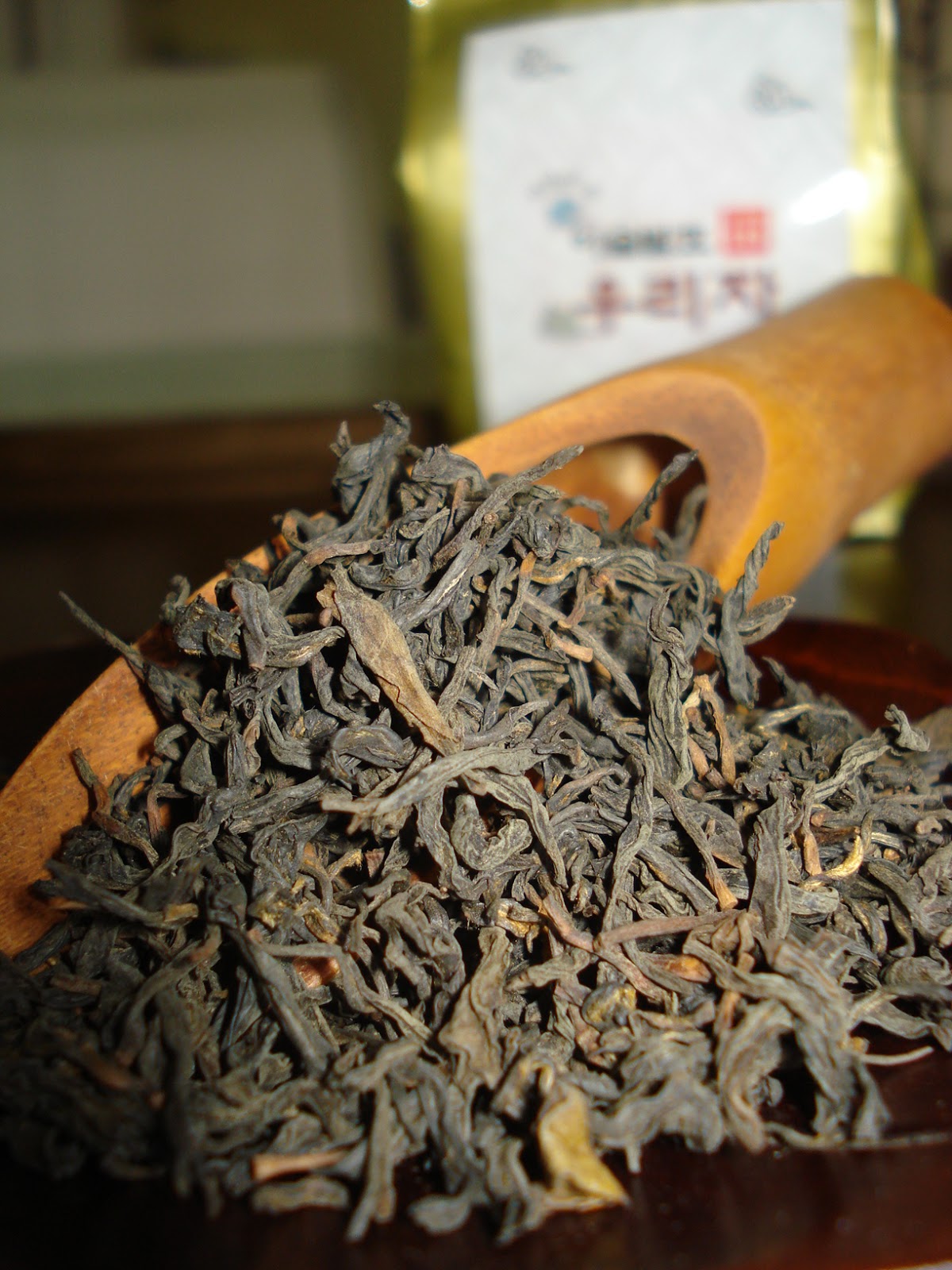
A few weeks ago I received a package from Arthur and he kindly included this tea along with the others I had ordered. Thank you Arthur! He couldn't remember which he had sent, hence the title of this post. If I had to guess I would say this is Sejak, the dry leaves are a little thicker and chunkier than I would expect from an Ujeon. I have only had Ujeon once before so it,s not as though I really know what I,m talking about here.


The aroma from the dry leaf is pristine, clean and sweet. Notes of pine, grain and florals. Very pungent but not heavy. Why can,t all my green teas smell so gorgeous? I wonder how much this tea costs?


The sweet smell of toasted grain and pine wafts from the pot as I pour out the first infusion. Very rich but delicate and balanced. A tad too yellow for a Ujeon, don,t ya think?


The second infusions color is much more yellow and not quite as clear as the first, it,s also sweeter. What I find interesting about this tea is that it has a very full and rich mouth feel but the flavors are never heavy and dull. When the tea starts to fade in later infusions it,s flavor and aroma stays very clean and pure. As opposed to heavy dull and chalky.


Tiny, tiny little baby leaves, what a pain this must have been to harvest. A labor of love I guess. God Bless Em!

July 25, 2013

2013 Jukro Hwagae Valley Jungjak

In a recent episode of Tea Goober we talked about Jukro,s 2013 Sejak. Now it,s time to try Jukro,s 2013 Jungjak. Sejak grade tea is usually made from the second flush, while Jungjak is made from the third flush. The first flush is called Ujeon, but who can afford that? Not me! If you would be so kind as to click on the link above you will see the difference in the dry leafs appearance. The Jungjak grade is noticeably thicker and chunkier. The dry leafs aroma is heavier with the smell of pine, grain, honey and slightly herbaceous.


Park Jong Il,s tea ware has such personality. It,s hard to put my finger on it but they seem to be kinda whimsical. From this angle it reminds me of a Carp gasping for air. Maybe he is hungry for some good tea.


Park Jong Il,s cup has gone through quite a change in appearance. The interior is speckled with tiny little flecks of discoloration and blisters. I like this pot and cup very much.

The teas flavor reflects the leafs aroma very well. Grain, honey, slightly piney or sappy and herbaceous. Mouth feel is full and round, no sharp corners here. Like Jukro,s 2013 Sejak, it has a noticeable creaminess. And like Jukro,s 2013 Sejak, the cereal or malted grain flavors, which I associate with Korean green tea is barely noticeable.

I,m not gonna go on and on describing the teas flavor as it progresses through consecutive infusions.


The color of the soup is darker than the Sejak grade. Much heavier and richer. I enjoy both Sejak and Jungjak but if I had to choose one or the other, it would be Jungjak. I like big flavors and aromas.

If you are interested this tea can be found at Good Green Tea. It,s not cheap. I guess that goes without saying though. Korean teas never are.

July 17, 2013

2013 Jukro Jiri Mountain Bahlyocha

A couple of months ago Sam of Good Green Tea asked as he was preparing to leave for Korea if there was any particular teas I would like him to bring back with him. This is one of the two teas I requested. Over the past several years I have had quite a few Korean Yellow teas and have liked all of them. All the different producers seem to have their own unique way of making their oxidized teas and the flavors can vary considerably. I had never had Jukro,s Bahlyocha before but knew I was in for a treat, as all their teas are excellent.


Typical packaging for Jukro, Paper outer bag, inside the paper bag is a sealed foil bag, inside the foil bag is a wax paper bag.

Even though summer is in full swing here in Austin I can,t help it, I've got to try this tea. Normally this time of day in Austin (93 degrees) an ice cold Shiner Bock is my beverage of choice.


The appearance of the dry leaf tells me what I,m in for. The dry leafs aroma is heavy with deep, dark chocolate, notes of honey, malted grain and spice.. With the heavier oxidation of the leaf the floral aspects are pushed to the background but are still there for the observant, mostly in the later infusions.

The dry leaf is very thick and chunky. Which tells me there is lots of juicy goodness to be had. Even though I have yet to taste this tea I know without a shadow of a doubt that I,m really, really, going to like it a lot. All the tell, tale sign,s are there.


Here,s a tea that,s right up my alley. Jukro,s Bahlyocha has a very rich and full mouth feel. Malted grain, honey, toasted nut,s, dark chocolate with just the slightest suggestion of spice. Makes my palette very happy. This tea seems to be more durable than other Bahlyocha,s I've had, easily 5-6 infusions. The flavors don,t wash out easily, they go on and on without dropping any of the grain and cocoa aspects.

I remember when I used to be so meticulous with weights and measurements when it came to brewing tea. Over the past couple of years I have become less obsessive about it all. I don,t weigh anything anymore, just a few good pinches of tea goes into the pot. Add water and observe how the leaves are opening up. When fully saturated, that's the signal that everything is good to go. There are times when I don,t get it quite right but no matter the situation it,s always easily correctable. More or less water, or longer or shorter steeping s, makes everything right again. This all has to do with how many infusions you get from any tea.

As of today, Sam hasn't updated his site and this tea isn't offered yet. But I,m sure if you ask nicely he would be more than happy to hook you up with some of this delicious tea.

July 14, 2013

Jukro 2013 Jungjak Balhyocha

Sam,s back from Korea and as promised he brought some very nice teas home with him. Sometime later I,ll write a post for each of these. Very curious about the Jungjak as well as their Balhyocha.


May 30, 2013

2013 Zeda Sejak


As I posted yesterday, I received both the Zeda And Jukro 2013 Sejak teas from Sam of  Good Green Tea in the mail a few days ago. I have never had the pleasure of trying any of Zeda,s teas before so......lets get the party rolling and discover what we have here. As it states on the packet, Grown in the Hwaegae Valley of South Korea, known for producing high quality green tea. Heavenly mellow aroma, sweet note with a touch of vegetation.


Yikes! What a horrible picture.  Zeda packages their products in a less elaborate style than Jukro, but that don,t mean anything really. Whats inside is what counts and what I,m seeing and smelling looks good.

The water has boiled, everything is set, so let,s brew some Sejak and enjoy.


There! That,s more like it, isn,t it? Comparing Zeda to Jukro, the Zeda,s dry leaf seems to be much longer and spindly. The scent is a touch more vegetal but a little lighter, brighter than Jukro,s Sejak.


This is always the exciting moment when your trying new teas. The tea is steeping, the pitcher and cups are pre-heating. Now your just waiting to see what emerges from the pot. Will it live up to my expectations? Or will it be just another pot of tea.


This is a very nice, well made tea. A nutty, vegetal, pine tree scent wafts from the pot and cup. It smells really good. The flavor and aroma I associate with Korean green tea is that of malted grain and honey, but there is only the slightest trace of those characteristics here. This tea isn,t a disappointment by any means. Zeda,s Sejak has a lot of depth and richness. The aftertaste hits full force permeating my nasal passage, which is no small feat as I have horrendous allergies this time of year. I would be really interested in trying Zeda,s Jungjak, which has got to be equally gorgeous.

If you have never had fresh Korean teas ( or any fresh green tea ) it really pays to get good quality spring water, the difference it makes is astonishing. Here is Austin the water is very hard and can kill the flavor and aroma of any tea. Even when I have filtered it, the water still tastes of chalk and minerals.


The spent leaf is a mix of whole and torn leaves. A beautiful healthy green. Zeda,s Sejak has more than lived up to my expectations. It,s gorgeous! The durability is good also, 3-4 infusions before it washes out.

I must get more of this tea. One thing that kinda annoys me about some of these teas is that they are packaged is such tiny quantities. This Sejak comes in a 40 gm. packet. To me, that's really just a little more than a  sample size. I,d be much happier with a 100 gm package. But..........that,s just me being nit-picky.

Go see what Matt has to say about this tea.

May 29, 2013

2013 Jukro Sejak

The long awaited 2013 Korean teas are now available from Sam of  Good Green Tea  Apparently  Matt received the exact same teas on the same day that I received mine. 2013 Jukro Sejak and 2013 Zeda Sejak. I have never had the Zeda brand of teas before and I,m curious to see how different they are. But I,m going to sit on the Zeda and dig right into the Jukro.


The packaging is a little different this year, they have included a booklet that is more or less a menu of Jukro,s offerings. Of course the teas are all in ultra deluxe packaging. On the front page of the booklet it states "Can make deep scent only with honest hands"......... this has me worried. Could I possibly make a deep scent? After all, look at how I have lived my life, all the people I have hurt.......Just kidding, I,m a good guy. This reads like a disclaimer, as if they are saying, if you fail to make a decent cup of tea it,s your own moral character that,s to blame. Despite my degree of honesty I,m gonna dig right in and see if I can conjure up a deep scent.


I can never get an accurate color of the dry leaf with this old, worn out camera. But just the same, here it is. The dry leaf is actually a rich, deep, forest green. The aroma is equally deep and rich with a slightly toasty, vegetal smell with a touch of that clean, crisp pine forest in the background. There is also the slightest suggestion of salinity.


As the tea is poured from the pot that much anticipated smell of toasted grains and that unique deep forest greenery permeates the senses. The smell makes me think of a pine forest on a crisp and cool morning. The flavor is more vegetal and toasty than grain with traces of honey or malt. With Junjak it seems that the pecking order flip-flops with the grain taking dominance, with a fuller mouth feel.


You can see by the teas color that it brews up clean and clear. It has a very light body but the aroma and flavor are rich. A very delicate level of sweetness washes over the taste buds and leaves me wanted more.So.......the infusions march forward until the leaf is exhausted and I am satiated.


Are those not some of the freshest looking leaves? All in all the picking standard is good but a good portion of the leaves have been torn. I don,t know if that affects the flavor all that much anyways. I,m looking forward to Jukro,s 2013 Junjak as well. A later harvest tea which has more body and toasted grain flavors but lacks the clarity of a Sejak, at least thats the way I think of it. Jukro is really consistent, the 2013 tea is identical in all aspects to the 2011 version I have posted on previously.

Thats about all I can think of to say about this tea. Very, very nice. But expensive.


May 2, 2013

Kim Song Tae Ddokcha

For years I have been reading Mattcha's blog (All things tea, especially Korean) With all the various types of tea that is made in Korea be it Ujeon, Sejak, Jungjak, Hwangcha. One of the teas that most intrigued me was Ddokcha. Actually back when I first started reading Matt's blog I had never had any type of Korean tea. I think it was 2008 when Matt first started his blog and back then there was no chance in hell that a westerner shopping online was going to run across any Korean teas. Things have changed. Now   it's fairly easy to find some good quality, handmade Korean teas. Reading through Matts blog today it's easy to see that  Matt played a significant role in these teas and tea wares becoming easier to source. Always educational and informative. He has taken on some massive projects with his blog, remember the Book Club?  So.......we all owe Matt a big


Or maybe we should hold him to blame. Haha!

Anyways, on to the Ddokcha. The one I brewed today was made by Kim Song Tae. A gift from
 Morning Crane Tea. A small circular wafer of compressed tea. I had a general idea of how to brew this tea, a fairly large qty. of water and a brewing time of about 2-3 hours. I knew going into this that the brewing time was crucial, too little and the teas bitterness would dominate. I tasted the tea as it brewed to learn what to look for and to see the how the flavor and aroma changed as the tea continued to simmer away in a glass kettle.
The tea has a very pungent aroma of spice's. Sure enough as it continued to brew the Ddokcha developed a rounder, softer, sweeter flavor. The soup had changed from a pale yellow to a deep orange color. I had tasted it at around the 2 hour mark and it was quite bitter and astringent. By hour 3 the tea was pretty good. Even though this was the first time I have tasted Ddokcha I think it is a simple, unpretentious tea. There is not tons of complexity but what is there is pretty straight forward and easy to enjoy.

Next time I'll take some pics and do the whole kit and kaboodle for ya!

April 25, 2013

Jeong Jae Yeun Jiri Mountain Hwang-Cha

This particular Hwang-Cha is something extra special. Why is it special? Because this tea was handmade from wild tea bushes. Also because it is made before Buddha's birthday. (first flush in other words) Which from what I understand is a bit unusual because typically the first and second flush are used for making green tea. Later in the season is when leaves are picked for Hwang-Cha production. So...Jeong Jae Yeun must have real a passion for Hwang-Cha if he is willing to sacrifice the first leaves of spring to make this type of tea.

This tea as well as a couple of others were acquired from Morning Crane Tea. Arthur (Morning Crane Tea) also sent along some samples of Dok-Cha. I have never had Dok-Cha before and I;m a little uncertain as to how to brew it. One cake type Dok-Cha and a disk type Dok-Cha. The cake type requires roasting before brewing but the disk type doesn't. Water to disk-cake ratio? I have no idea. Have to get in touch with  Matt he will know. But I;ll get around to that sometime in the future.


As you can see the dried leaf is very long and chunky. Even with the help of the funnel it's not easy to get these leaves into the pot without breaking them. In my opinion this tea requires a lot of leaf to get fully saturated flavors, 6 gm's for this 8 oz. pot. Sounds like a lot but skimping on the quantity is a mistake. I think a lot of people, including myself, have the tendency to skimp on the leaf qty. in an attempt to make their teas last a bit longer. But not using enough leaf brews a cup of fairly lifeless tea no matter the teas quality.


Very full and rich, sweet flavors of grain, malt and honey. I agree with Matt that there are some fig like fruit flavors. The tea's aroma follows suit matching the flavor. This tea requires opening up. Meaning that the leaf is very tight and compact and consequently the first infusion isn't necessarily representative of what it's capable of. By the second and third infusion it's depth starts to shine.

I will say that the Balhyocha made from later harvest's seem to have more body. Not that this one is lacking in any way.......Just saying! It's durability can go the distance without missing a beat. None of the flavors drop out, they just change positions, an attribute that I relish in any tea.


195 degree water and the first infusion is a bit pale isn't it? I'm not concerned, I've been drinking this tea for several days now and I know that this is just the beginning of whats to come. This is a very nice tea that I'm enjoying very much. I've been getting 5-6 infusions from the leaf. And every one of them is still very full and rich, as opposed to washed out and thin. I do increase the water temperature a bit in the later infusions trying to get every last bit of goodness from the leaf.

Arthur asks, Is this the best Hwangcha made in Korea? I don't know, but in my book it's superb. Arthur says he will be back from Korea in June with freshly made teas, can't wait.

April 30, 2012

2011 Ssangke Black Tea Sejak

Here's something tasty for us to try today, Ssangke's, Black Tea Sejak. In my opinion, Korean black tea's have absolutely nothing common with western style black tea's. No astringency or bitterness to be found here. This is the 2nd time Ive purchased this tea from Sam at Good Green Tea. It's not often that I find tea's that I deem good enough to re-order, but this tea is really, really good. The usual scenario with me is that initially I,m really liking a tea then by the time Ive finished the bag Ive grown weary of it, not the case with this one. Pricey? Yes, but not exceedingly so. $27.99 for 40 gms. But they are presently on sale, refer to Good Green Tea's site to find out the sale price. Inside the container are two, 20 gm. zip top packets. As far as I,m concerned, it's money well spent. And if you take into consideration that Good Green Tea offers free priority mail shipping and that Sam's fast as lightning when it comes to getting your order out, then it's really a justifiable /  affordable treat.

But then again......if there is one thing I am exceptionally good at it's justifying buying expensive tea's and tea ware's.


The container states, Black tea Sejak is a tea that was fermented and aged for 500 days.
As a Sejak tea, it also has a refreshing, light taste and has a bright tea color that resembles the sunset. Compared to ordinary teas, this aged tea has a mild taste that everyone of all ages can enjoy.


I agree that this is a tea that everyone would enjoy. The aroma wafting from the tea pot would even hold the attention  of a child. As soon as the water hits the pot there is the delicious smell of nut's, chocolate and honey. The malted grain aroma's are there as well. Smells sweet as could be, kinda like a candy bar.


The dry leaf is mostly whole unbroken leaves that also remind me of chocolate. You can see that though the leaf is primarily the color of cocoa there are little touches of green still to be found. So, this tea hasn't really been "fully fermented" as a typical black tea is.


The picture above is the first infusion. The flavors mimic the aroma to perfection. Nuts, chocolate, toffee, honey, toasted grain and the faintest touch of very delicate florals. It's kinda surprising that the floral aspects are still intact after being fermented and aged for 500 days. The floral flavors don't deminish with repeated steepings, in fact they become more noticable in the later brews.


This tea is so rich and sweet that it's kinda like having a dessert. In the background there is the slightest hint of a dry, woodsy aspect. Very durable, I easily get 4-5 good steepings.

Pictured below are the spent leaves. It's not really a "black tea" it's more of an Oolong to me. Or should I say Balhyocha, which is the Korean name for a semi-fermented tea.

This is a very nice tea that I,m enjoying a lot. Again, as I mentioned above, this tea is actually quite affordable. But like all Korean tea's they are expensive when compared to tea's from another origin. So, for me these tea's fall into the category of "special treat" not an everyday sorta tea.

April 27, 2012

2011 Jukro Hwagae Valley Jungjak

So here's the follow up to yesterdays post. In yesterdays post we tried Jukro's 2011 Sejak. Today lets get into Jukro's 2011 Jungjak. Sejak is typically the second flush and the Jungjak the third. I think these are just general rules, depending on the weather there's room to fudge a little with these classifications.


Once again the packaging of Jukro teas is DELUXE. So many layers of stuff to open before you get to the tea. The Sejak is packaged in two 40 gram sealed packets. The Jungjak is packaged in one 80 gm. packet but inside the foil bag that you see in the picture below is guess what?.......Another bag, this time a bag made of wax paper. Jeez...............I,m getting excited over wax paper?


The sign of a true tea head, bull dog clips. There never seems to be enough of them. Thank you Jukro for packaging your teas with these indispensable tea accessories.


The dry leaf is noticeably chunkier and larger. Not a great picture here, too much glare, kinda washed out and dull, but you get the idea. The leafs aroma is heavier and sweeter smelling than the Sejak. The toasted, malted grain aroma's take dominance. Woodsy, earthy and sticky sweet. Smells delicious!


Like the Sejak, the Jungjak's flavors accurately match the teas aromas. The Jungjak's mouth feel is heavier, coating the palate with woodsy, nutty, toasted grain and honey flavors. Lacking the pristine clarity of the Sejak, substituting  equally delicious but simpler flavors. In the later infusions the fruit and florals make an appearance, but they are more like stone fruits. Where as the Sejak has more of a  lighter fruit flavor, such as pears. The notes of pine and sap found in the Sejak are not present here.

Like the Sejak, the Jungjak's durability is excellent. I get three good infusions, maybe four if I was a little more careful with my timing, I tend to let the later infusions steep for a little longer than necessary, not intentionally but because I get distracted easily sometimes. You would think that when dealing with teas that are this pricey I'd learn to pay more attention, but no, sad to say, but I don't.


You can see that the tea brews up almost as clean as the Sejak. Maybe just a tad more yellow. Jukro's teas are for me a special treat, not something I could afford to drink regularly, that is, were they always available. Sam at  Good Green Tea has only a couple of these teas left in stock, and they probably won't last long. 


I accidentally deleted the picture of the used leaves, I,ll add another at a later time.

April 26, 2012

2011 Jukro's Hwagae Valley Sejak


Like me, this tea is getting to be quite elderly but not quite ready to retire. Sam at Good Green Tea is offering a line of Jukro teas, as well as Hankook and Ssangkye brands. Sam's a real nice guy and offers these teas at a fair price and free shipping. By the way, he is pretty darned fast at getting his orders out, it's never taken more than two days for me to receive my order. My purchase consisted of this Sejak and Jukro's Jungjak.

Being from the 2011 season I was a little hesitant to spend my hard earned cash on these teas. But then again, I was very surprised when I had tasted Ssangkye's 2011 Jungno, tasted as fresh as could be and was a superb Korean green tea. So what the hell......I went ahead and placed my order.


Such elaborate packaging. Jukro's teas come in 80 gm. containers but are packaged in two 40 gm. sealed packets and thrown in for good measure is a small bulldog clip to re-close the bags after opening, these guy's think of everything.

The dry leaf is long and spindly, mostly whole un-broken leaves. I guess all that packaging paid off. It smells very fresh and green, kind of an earthy, foresty green. In the background there is the faintest of pine or sap aroma's that are just begging for some hot water to let them come out to play.


So the waters been heated, the table set, let's get down to business and see what we have here.


Just as I expected, there it is, the whole rooms been filled with that smell that is so unique to Korean tea's. Toasted grain and honey with the aforementioned pine and sap playing their part. So clean and pure, but quite earthy and foresty at the same time. Jukro's tea's seem to me to be a little more down to earth and wild tasting than other Korean tea's Ive had, maybe that's their niche.


The cup brews up so clean and crystal clear. The same notes of grain and honey that is in the aroma are in the tea's flavors as well. In the aftertaste the pine is the most noticeable aspect, along with a very subtle sweetness.


You can see for yourself that the picking standard was pretty good, mostly whole leaves. A very fresh vibrant green for being a year old now. Typically they turn a green grey with time. I consider the price of this tea as money well spent. No regrets, I,m loving every sip. The flavors hold up pretty well through 3-4 infusions. Never becoming overly vegetal and chalky, but remaining the same as it started, just toning it down with each additional infusion until the leaf is spent. Though in the later cups there is a little tartness, it's barely noticeable, and not necessarily a bad thing.


Next up..............Jukro's Jungjak.

April 20, 2012

Tea Trekker's Organic Co-Op Jungjak

Ive been drinking this Jungjak for a while now. Tea Trekker has this on sale for $72.00 a lb. From what I understand this tea is grown in the Hwagae valley and it's a blend from a co-op of growers. This batch of Jungjak is from a late spring pluck (4th pluck, early May ) so it's flavors are just a little more assertive and maybe a little less refined than an earlier harvest would be. But just the same it's flavors and aromas are pretty darned nice, especially for the asking price.


As you can see the dry leaf is a little on the chunky side. Not bad, but much coarser than an earlier harvested tea. The smell of the dry leaf is unmistakably Korean green tea. It has that toasted grain aroma with slight vegetal notes. Using water that's at 175 degrees this tea brews a cup that tastes of malted grain, a little woodsy and sweet. In the background are some fruity aspects and just the faintest of florals. Using water that's 180-185 brings the vegetal flavors to the foreground.


Just a photo-op for my new Park Jong Il teapot. Ive had this pot for a couple of months and it's pretty well seasoned now. When new it brewed a pretty bland pot of tea. Both it's interior and exterior are un-glazed so it takes a while for the interior to become saturated with tea oils. The pot holds heat very well but unlike most stoneware teapots it's walls are fairly thin (a testement to the potters skill ) and consequently doesn't over steep green teas.

With most quality Korean tea's I usually will re-steep the leaves 2-3 times. But with this particular tea the second infusion is kinda ummm........not so great. But all in all, this is a good everyday sorta tea that's sold at an attractive price.


You can tell by the soups color that it's from a late harvest, much deeper yellow and not as clear and clean.
Sorry for the kinda bland, washed out pics but my camera wasn't being very co-operative today.


Another Park Jong Il tea cup. I love this cup, it holds a fairly large amount for a Korean cup, maybe 5 ounces or so. The glaze seems to change daily with new little fractures showing up. One thing Ive noticed is that if you use it daily it becomes kinda dark and grey on the inside but returns to it's normal color if left to dry overnight. Ive become quite a fan of Park Jong Il's tea wares and am looking forward to adding to my collection. There's something about Korean tea wares, or should I say Korean pottery in general that appeals to me. More than just another material acquisition for my tea cabinet, there is something I find very down to earth and unpretentious. The soft, creamy glaze of the cups have no need for decoration. There is a world of beauty in the glaze itself. The slight shine of the teapot is the result of being fired in a wood burning kiln. Park Jong Il uses pine as his wood of choice. You,ll notice that one side of the teapot is shiny and the other side is matte. The shiny side is the one that was facing the fire in the kiln.